MangoBot partner footage · short excerpt
01 / Education & visitor experiences
Learning through interaction
Make robotics something people can observe up close.
Explore the use case
Home / Robots / Education & Research
Humanoids, quadrupeds and dexterous robot hands for teaching and research, plus a quadruped teaching kit. Select the system around the learning objective.
Robots for this sector
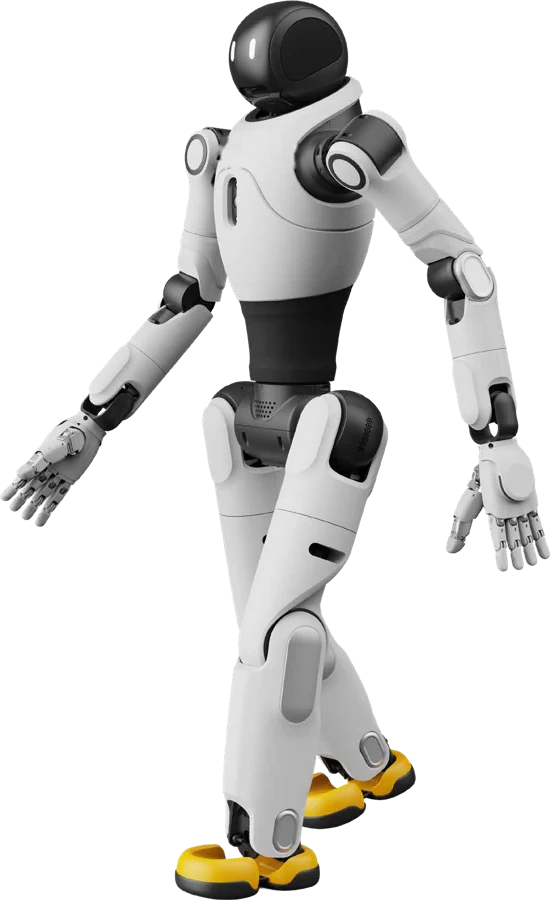 Compact humanoid
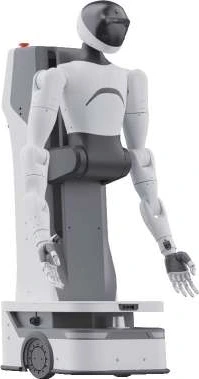 Research humanoid
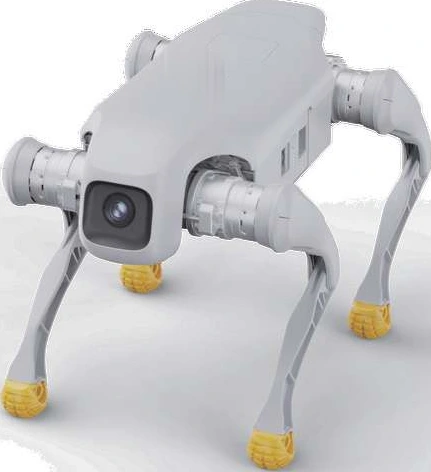 Teaching quadruped
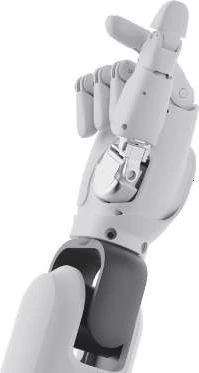 Dexterous robot hand
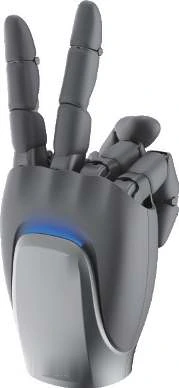 Dexterous robot hand
Wheeled humanoid platform for embodied AI research and teaching. The portfolio describes a 275 TOPS computing platform, three depth cameras and five fisheye cameras, with datasets and a toolchain for training and testing models.
Applications: Embodied AI labs, imitation learning and university research.
Reference specifications: 130-180 cm height · 150 kg · 4 h+ battery life. 20+ degrees of freedom · 70 cm single arm span · 3 RGBD + 5 fisheye cameras.
Discuss this system ↗Compact quadruped for classrooms and research labs. Ethernet, USB, SBUS and UART ports support connecting additional hardware. The portfolio lists manuals, SDK, URDF models and Isaac/MuJoCo simulation.
Applications: Teaching, hardware integration and robotics research.
Reference specifications: 15 kg · up to 8 kg payload · 1-2 h battery life. 61 × 37 × 40.6 cm standing size · 3.7 m/s maximum speed · 30° maximum climbing angle in standard environment.
Discuss this system ↗Dexterous robot hand for labs working on grasping and manipulation. The portfolio lists a manual, SDK, finger-control API, URDF and MJCF models, plus Windows and Linux control software.
Applications: Grasping, finger control and manipulation research.
Reference specifications: 500 g · 5 N fingertip force · 0.5 mm repeatability. 10+6 degrees of freedom · 180 × 85 mm · 0.7 s open/close.
Discuss this system ↗Dexterous robot hand for grasping and manipulation research. The portfolio lists the same software and simulation resources as OmniHand, with different force, size and repeatability figures.
Applications: Grasping, finger control and manipulation research.
Reference specifications: 750 g · 20 N fingertip force · 0.4 mm repeatability. 12+7 degrees of freedom · 207 × 98 mm · 0.7 s open/close.
Discuss this system ↗A course and hardware package for universities, technical colleges and research labs. The portfolio describes 96 hours over two semesters, eight teaching-material categories in English and Chinese, 200+ video lessons and 300+ exercises.
Listed hardware includes a depth camera and LiDAR, voice module, 156 TOPS computing module, and open control and low-level interfaces. Confirm the exact kit, robot compatibility, software access and included teaching resources during scoping.
Discuss the teaching kit ↗Product descriptions and reference specifications are from the FRWRD Events & Education portfolio, which attributes them to manufacturer data. Figures are subject to change and confirmation. Availability, exact configuration, software access, training and support are agreed for the selected system and project.
From footage to a use case
01 / Education & visitor experiences
Make robotics something people can observe up close.
Explore the use casePartner demonstrations from MangoBot, not FRWRD deployments. Assessment is required for your site.
Other sectors
Hospitality, Events & Public Spaces ↗ Industrial & Infrastructure ↗
Begin with the learning objective: interaction, observation, embodied AI, mobility, grasping or manipulation. The education range includes the Compact Interactive Humanoid, G1, D1 Edu, OmniHand variants and a quadruped teaching kit.
Share the room layout, participants, intended activity and supervision arrangements. Do not assume a robot is suitable for an unsupervised classroom or every research task.
How we scope it
Buyer questions
Start with the teaching or research objective, the users, the space and the capabilities to test. Scope and commercial terms must be confirmed for the selected platform.
For an education or research project, FRWRD provides engineering integration, commissioning, training and maintenance. The scope and operation responsibilities must be agreed for the selected platform. An included staffing package is not assumed.
Compare the teaching or research objective, the users, the space and the capabilities to test, then confirm fit with FRWRD. Bring the requirement rather than choosing from specifications alone.
FRWRD does not manufacture the systems shown here. FRWRD supplies systems and handles deployment, engineering integration, commissioning, training and maintenance. The scope is agreed for the selected system and project.
For education or research use, start with the teaching or research objective, the users, the space and the capabilities to test, access and the existing workflow. Configuration changes and the responsibilities of the team must be agreed for the pilot, not assumed.
An education or research pilot should have a defined task and a result that can be checked. Bring the teaching or research objective, the users, the space and the capabilities to test. Agree what to measure, including the result, operating time and the effort needed to run the system. See robotics pilots.
Ask about the selected platform and project. Purchase, rental and pilot availability and terms are confirmed individually; this page does not guarantee that every system is available to rent.
Start with the task
FRWRD Intelligence
Based in Abu Dhabi and Doha · Serving the GCC
Enquiries are read by the FRWRD team