
Home / Guides / Humanoid vs quadruped: which suits your application
Humanoid vs quadruped: which suits your application
The two forms do different jobs. Choosing well starts with the task and the site, not the robot.
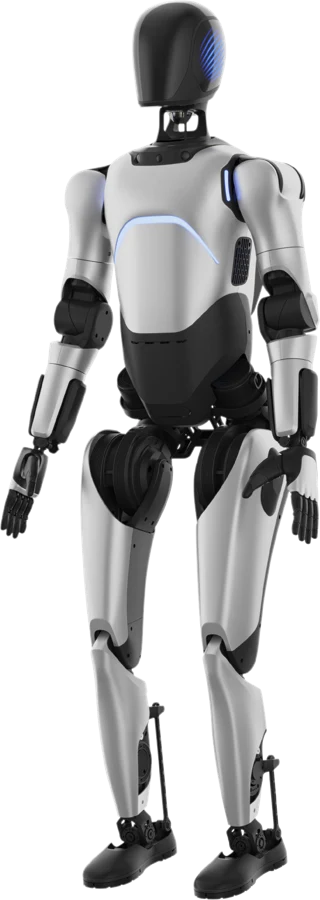
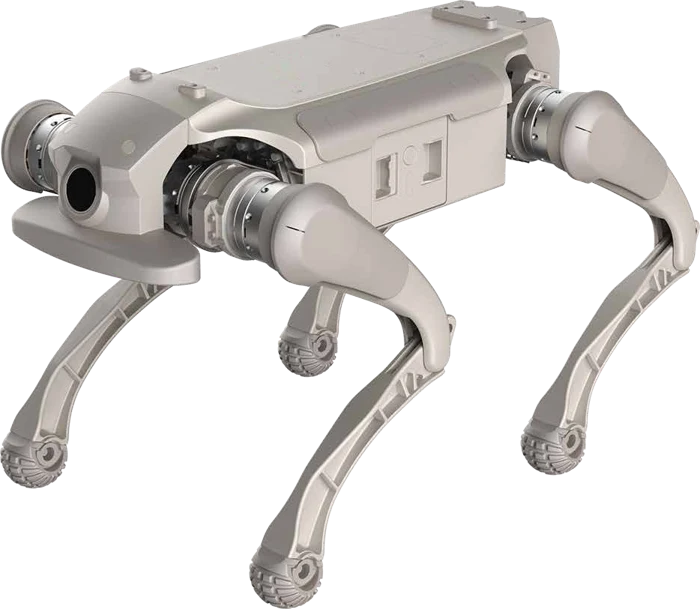
What each form is good at
Humanoid robots have a human-like form. FRWRD's range includes systems for reception, guest interaction, stage performance and industrial tasks. A human-like shape does not make every robot suitable for every job.
Quadrupeds move on four legs. They suit rough ground, stairs and routes that wheels struggle with, carrying sensors or a light payload. The Compact Quadruped, for example, is listed at 3.7 m/s top speed, 5 kg payload and IP54 protection (published manufacturer data, subject to change).
Start with the task
If people will interact with the robot, such as greeting visitors, guiding or performing, a humanoid is usually the starting point. If the job is moving through a site to inspect, patrol or carry sensors, a quadruped is usually the starting point.
Some tasks sit between the two. Material movement on flat floors may suit a wheeled industrial humanoid. Inspection routes with stairs or uneven ground may suit a quadruped. Check the route and the output you need before choosing.
Questions to answer before you choose
What is the task, and what output proves it worked? What are the floor, stairs, gradients and obstacles on the route? Who will be near the robot? What are the heat, dust and protection requirements? How long must it run between charges?
Specifications come from published manufacturer data and are confirmed against your site at scoping. A pilot on one repeated task is the safest way to compare forms on your own site.
See the system in motion